Liquor Store Loyalty Program

What Actually Works and What Wastes Your Money
Most liquor store owners who try a loyalty program describe the same experience: they set it up, ran it for six months, and quietly stopped because nobody used it — or nobody remembered to ask. The punch cards piled up near the register. The points were never redeemed. The email list had 47 contacts and hadn’t been touched since January.
A loyalty program that nobody enrolls in isn’t helping a business.
But here’s the thing: the math on customer retention is real, and it favors independent stores that get this right. A 5% improvement in customer retention improves profits by 25% to 95%. Acquiring a new customer costs five times more than keeping one you already have. If you run a store doing 200 transactions a day, and 30% of those customers never come back, the cost of that churn is enormous, even if you can’t see it on a report.
This guide covers the parts other articles skip: the financial framework for setting rewards your margins can support, the state laws that could get your license flagged, and the operational reality of getting staff to actually enroll customers. By the end, you’ll know whether a liquor store loyalty program makes sense for your store and exactly how to build one that works.
The Honest Case for a Liquor Store Loyalty Program
The Retention Math: Why Keeping Customers Is Worth More Than Finding New Ones
The five-times rule is well-documented: customer acquisition costs five times more than retention. But the number that should actually get your attention is this: loyal customers spend 67% more per transaction than new ones.
For a liquor store, that math is particularly favorable. Your top customers aren’t buying one bottle at a time — they’re buying cases of wine, allocated bourbons, and specialty spirits on a regular schedule. If you could identify those customers, communicate with them directly, and give them a reason to choose you over someone else down the street, your revenue per customer goes up without spending a dollar on ads.
Here’s a simple way to put a number on it for your own store. Take your average monthly transaction count, multiply by your average basket size, and then estimate how much of that comes from repeat customers. A reasonable baseline: in a well-run independent liquor store, 20–30% of customers account for 60–70% of revenue. If you can move even 10% of occasional buyers into that repeat-purchase category, the revenue impact is measurable within a quarter.
What the Data Shows About Program Adoption in Independent Retail
About 85% of consumers say they prefer shopping at stores with a loyalty program, but preference doesn’t mean behavior. The gap between “customers who say they’d use a loyalty program” and “customers who actually enroll and redeem” is where most programs fail. Independent retail typically sees enrollment rates of 5–15% of monthly transactions in the first year. That means if you’re processing 4,000 transactions a month, a realistic first-year loyalty database has 200–600 active members. That’s a real audience for a targeted promotion. It’s also small enough that getting it right from the start matters more than moving fast.
The Honest Downside: When Loyalty Programs Fail
Loyalty programs fail for three predictable reasons:
- Nobody enrolls. Staff don’t ask, customers don’t know the program exists, and the database stays empty. A program with 50 members is not going to move the needle.
- The math doesn’t work. Rewards are set too generously, redemption rates come in higher than expected, and the program costs more than the incremental revenue it generates. This happens most often when owners set point values based on what sounds appealing rather than what their margins can absorb.
- Compliance is an afterthought. Some owners build an entire program and then discover their state restricts exactly what they were planning to offer. In the alcohol business, enticement laws aren’t optional reading.
The Legal Layer Most Articles Skip: Alcohol Enticement Laws
This is the section competitors consistently gloss over. Most loyalty program guides aimed at liquor stores say something like “check your state laws” and move on. That’s not useful advice. Here’s what you actually need to understand.
What Enticement Laws Actually Prohibit (And What They Don’t)
Alcohol enticement laws are designed to prevent promotional tactics that encourage excessive consumption or target vulnerable populations. At the federal level, the Alcohol and Tobacco Tax and Trade Bureau (TTB) sets baseline rules, but states layer their own regulations on top — and those vary significantly.
The core restrictions that show up most commonly across states:
- Volume-based discounts tied to alcohol purchases. Offering a reward that scales with the amount of alcohol purchased (e.g., “buy 10 bottles, get a free bottle”) is restricted or prohibited in most states. This is often classified as inducing excessive consumption.
- Free alcohol as a reward. Redeeming loyalty points for a free bottle of wine or a free six-pack is explicitly prohibited in many states. The reward is seen as an incentive to purchase alcohol.
- Advertising restrictions. Some states regulate how and where you can promote a loyalty program, particularly if the promotion emphasizes price reduction on alcohol.
What is generally safe across most jurisdictions:
- Merchandise rewards. Branded items, glassware, bottle openers, tote bags — non-alcohol rewards are typically allowed without restriction.
- Non-alcohol consumables. Mixers, snack foods, and similar items are generally permitted as rewards.
- Early access to allocations. Letting loyalty members reserve allocated bourbons or limited releases before the general public is not a discount on alcohol — it’s a service benefit. This is one of the most compelling rewards you can offer and sidesteps most enticement concerns.
- Event access. Invitations to in-store tastings, winemaker dinners, or customer-only events are common and generally permissible.
- Discounts on non-alcohol purchases. If your store sells accessories, glassware, or non-beverage items, discounts on those are usually straightforward.
State-by-State Overview: Control States vs. Open States
Control states (Pennsylvania, Utah, Virginia, and 14 others) operate state-run liquor retail. Loyalty programs in these environments are either run by the state itself or prohibited for private operators. If you’re in a control state, verify what the state authority specifically allows before building anything.
Open states give you more latitude, but regulations still vary. Some states (Texas, for example) have detailed rules about what qualifies as an unlawful inducement. Others (California, New York) focus more on how promotions are advertised. Your state’s Alcoholic Beverage Control (ABC) board is the right starting point — most publish their promotional guidelines publicly. If the language is ambiguous, a 30-minute consultation with an attorney who specializes in alcohol licensing will cost far less than a compliance violation.
What You Can Safely Offer as Rewards Without Risking Your License
The safest reward structures for most independent stores:
- Points redeemable for merchandise, not alcohol
- Tiered access benefits (allocation priority, event invitations, early sale access)
- Points that convert to a store credit applied broadly — not explicitly to alcohol at checkout (verify this with your ABC board)
- Birthday perks that are non-alcohol items or experiences
The reward structure that causes the most compliance problems: points-per-bottle-purchased, redeemable for a free bottle. Avoid this configuration and get legal review if you’re uncertain about your state.
Designing a Program That Doesn’t Bleed Money
How to Set a Point Value Your Margins Can Actually Support
Start with your gross margin. A typical independent liquor store runs 25–35% gross margin, though it varies significantly by product mix. Here’s a framework you can run with your own numbers.
Say your average basket is $45 and your gross margin is 30%, you’re making $13.50 per transaction. If you award 1 point per dollar spent, a customer earns 45 points per visit.
Now decide: what is each point worth? A common starting point is $0.01 per point — so 100 points equals a $1.00 reward. At that rate, a customer needs to spend $100 to earn a $1.00 reward. That is effectively a 1% discount on a customer who shops with you regularly. On a $45 basket, that’s $0.45 in reward liability. Against $13.50 in gross margin, you’re giving back 3.3% of your margin to the customer. That’s a number most stores can absorb.
The danger zone is when redemption rates exceed projections. If you design for a 20% redemption rate and 60% of your members redeem, your reward liability triples. Set your point value conservatively. It is far easier to run a promotion that makes the program more generous than to walk back a reward structure customers are already banking on.
Redemption Rate Reality: What to Expect and How to Plan For It
Industry-wide redemption rates for retail loyalty programs sit between 20–40%. For specialty retail, which includes liquor stores, rates tend toward the lower end in the first year as customers build up points, and then spike once members cross a redemption threshold for the first time.
Budget for a 30% redemption rate and build a reserve. On a 1-point-per-dollar, $0.01-per-point program, a customer base that generates 10,000 points per month in liability represents $100 in potential redemptions. That’s manageable. The problem is when stores don’t track points outstanding and suddenly have a large liability they haven’t accounted for.
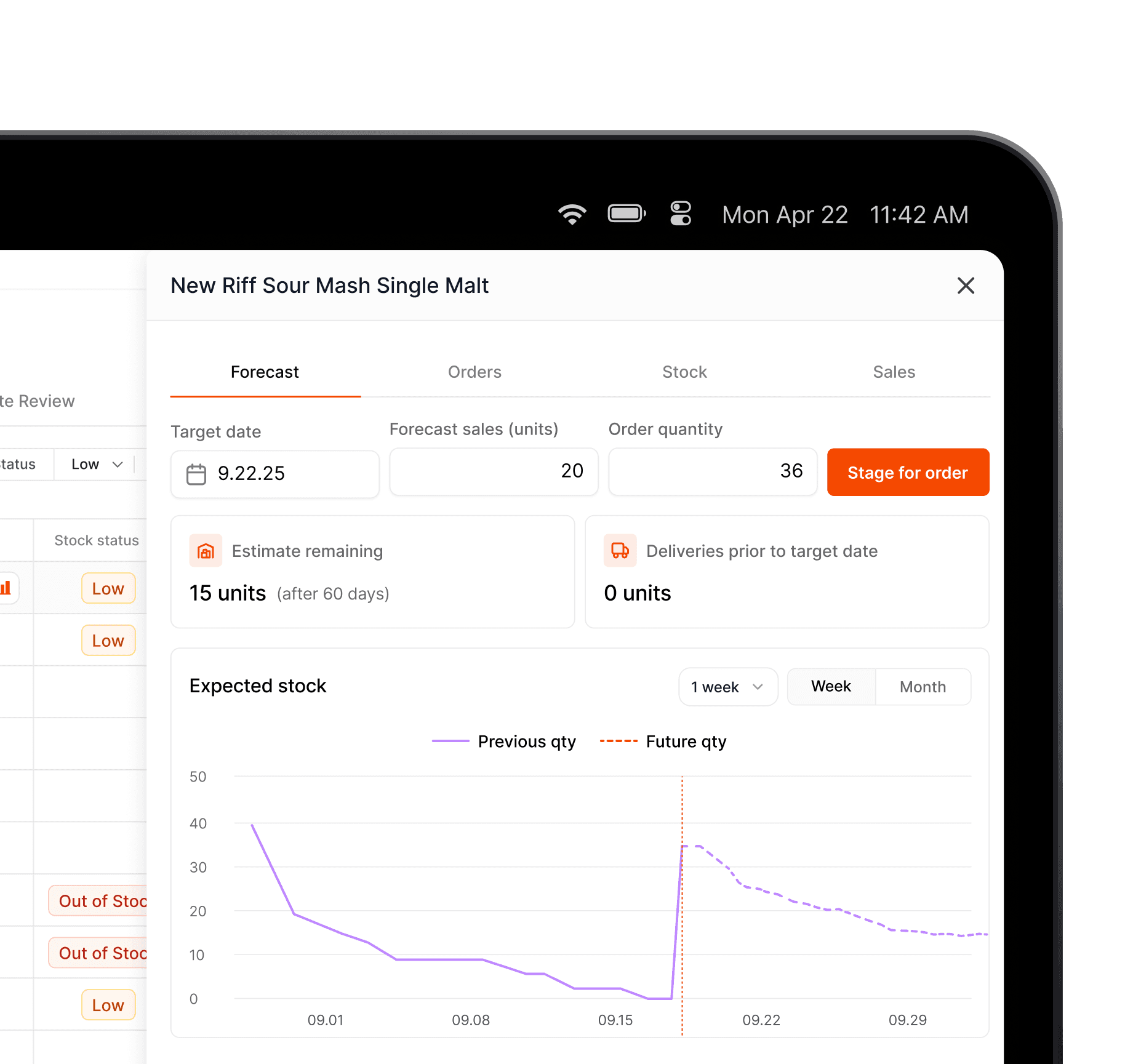
Your POS system should give you a running total of unredeemed points outstanding. If yours doesn’t, you’re flying blind.
Tiered vs. Flat-Rate Programs: Which Works Better for a Bottle Shop
Flat-rate points programs are simpler to run and easier for customers to understand. Every dollar earns one point. Every 100 points is worth $1. Done. For stores with 5–10 staff and no dedicated marketing person, simple is better, complexity kills execution.
Tiered programs (Silver/Gold/Platinum, or similar) work best when you have a clear separation between casual buyers and high-value customers. If 15% of your customers account for 60% of revenue, a tier structure lets you give those customers meaningfully better treatment (allocation access, private events, free delivery) without extending those benefits across your entire customer base. The math works in your favor. The operational complexity does not, unless your POS tracks it automatically.
For most single-location independent stores: start flat. A tiered program you execute well later is better than a tiered program you run inconsistently from day one.
The Hidden Cost of a Loyalty Program: What to Budget Beyond the Software
Software is the most visible cost and rarely the biggest one. The real costs:
- Staff time for enrollment and training. A proper launch requires 2–4 hours of staff training and ongoing coaching for 60–90 days.
- Reward liability. Budget for the points you’ll owe — this is real money.
- Marketing to your member base. If you’re running email campaigns or SMS, you need someone to write and schedule them. Even at 30 minutes a week, that’s 2 hours a month.
- The soft cost of a program customers hate. A complicated or slow redemption process at checkout generates friction. If customers get annoyed every time they try to redeem, they stop engaging.
Building Your Customer Database From Zero
The Enrollment Problem: Why Most Programs Fail Before They Start
Here is the number most vendors don’t tell you: the average independent retailer’s loyalty program has fewer than 200 active members after 12 months. Not because customers don’t want to participate but because nobody asked them consistently.
Staff behavior at the register determines your enrollment rate. Full stop. If your cashiers ask every customer during checkout, you will reach 5–15% enrollment of monthly transactions within the first year. If they ask when they remember to, you’ll have 50 names and a spreadsheet that nobody looks at.
Treat enrollment rate as a KPI. Track it weekly. If you’re doing 4,000 transactions a month and enrolling 10 new members, your enrollment rate is 0.25%. That’s a staff training problem, not a marketing problem.
How to Collect Emails and Phone Numbers at the Register Without Slowing Checkout
The ask needs to take less than 15 seconds. The best-performing enrollment scripts are brief and benefit-forward:
Do you have our rewards card? You get early access to our allocated bourbon releases and invitations to our member tastings. Takes 30 seconds to set up — phone number or email works.
That’s it. Not a pitch. A specific benefit, stated plainly, with a clear time commitment.
For capture: phone number is faster than email at the register. Most customers can recite their number without fumbling for their phone. Email can be collected on a follow-up text prompt. If your POS lets customers enroll via a QR code on the receipt, that reduces checkout friction further — but the verbal ask still has to happen first.
What doesn’t work: a paper sign near the register, a “sign up here!” prompt on a tablet screen, or a URL on the receipt that nobody ever types in.
What to Do With Customer Data Once You Have It (And What You’re Legally Required to Do)
Your customer data obligations:
- Privacy policy. If you’re collecting email or phone, you need a privacy policy explaining how you use customer data. This is required under various state privacy laws (California’s CPRA, Virginia’s VCDPA, and others) and is increasingly expected practice everywhere.
- Opt-in for marketing. Collecting a phone number for enrollment does not automatically give you permission to send marketing texts. Customers need to opt in to SMS marketing separately. Your enrollment form — digital or paper — needs to make this clear.
- Unsubscribe compliance. Every marketing email must include an unsubscribe link. Every SMS campaign must allow opt-out via “STOP.” These aren’t optional.
- Data security. Customer contact information and purchase history sitting in an unencrypted spreadsheet is a liability. If your POS stores this data, confirm how it’s secured and who has access.
Making the Program Work Day-to-Day
Staff Training: Why Enrollment Rate Lives or Dies at the Register
Your program is only as strong as your lowest-performing cashier’s enrollment habits. It’s just how retail works. The person who does the ask ten times a shift will enroll more customers in a week than the person who does it twice a shift will in a month.
Training should cover three things:
- The ask itself. Practice the enrollment script until it’s automatic. Role-play it in a team meeting. It should not feel like a sales pitch — it should feel like a quick heads-up before customers leave.
- What to do when someone says yes. The enrollment flow should be no more than two steps at the register. If it takes longer than 30 seconds, staff will stop offering because they can see the line building.
- What the program actually offers. Staff who don’t understand the rewards can’t explain them. If your top benefit is allocation access for bourbon collectors, every staff member should know how that works and be able to explain it in one sentence.
Set a store enrollment target — 40 new members per week is a reasonable goal for a busy single-location store — and review the number at your weekly staff check-in. When people know the number is being tracked, the behavior changes.
How to Use Purchase History to Actually Personalize Offers
This is where a loyalty database becomes a business intelligence tool, not just a discount mechanism.
A customer who buys Islay Scotch every three weeks doesn’t need a coupon on domestic beer. A customer whose purchase history shows they’ve bought every allocated bourbon you’ve stocked in the past year should get a call when the next allocation comes in, not a mass email blast.
The simplest version of personalization that any independent store can run: segment your loyalty members by purchase category (wine buyers, spirits buyers, beer buyers, mixed) and send category-specific communications. A two-segment email program — spirits vs. wine — is already more relevant than a single blast to everyone. This requires no expensive tools. It requires that your POS records what customers buy, and that you export that data to your email platform before each campaign.
When and How to Communicate With Loyalty Members
For an independent store, a realistic and effective communications cadence:
- Monthly email: Announce new arrivals, upcoming events, allocation windows for loyalty members. One email per month. Not more.
- Milestone texts: Automated message when a customer hits a points threshold (“You’ve got 500 points — that’s $5 toward your next purchase”). These trigger engagement without requiring manual effort.
- Event invitations: Quarterly in-store tasting or member night. This is the strongest retention lever in a bottle shop — customers who walk through your door outside of a routine purchase become advocates, not just buyers.
What not to do: blast promotional texts weekly. SMS has high open rates precisely because it’s used sparingly. Abuse it and your unsubscribe rate spikes.
What a POS-Integrated Loyalty Program Changes
Why Separate Loyalty Platforms Create More Problems Than They Solve
The typical path for a store without built-in loyalty: choose a standalone loyalty app, connect it loosely to the POS, and then manage two systems that don’t talk to each other cleanly. Staff have to enter customer information in two places. Points sometimes sync and sometimes don’t. Redemption requires a manager override because the POS doesn’t recognize the discount code automatically. The whole thing creates friction at checkout — which is exactly the opposite of what a loyalty program is supposed to do.
The operational cost of a bolted-on system is real. The data quality is worse because manual entry introduces errors. And the reconciliation headache — figuring out what was redeemed, who has what balance, whether a customer’s points carried over from last month — falls on whoever manages the books.
What Built-In POS Loyalty Looks Like in Practice at Checkout
When loyalty is part of your POS rather than an add-on, the checkout flow looks like this:
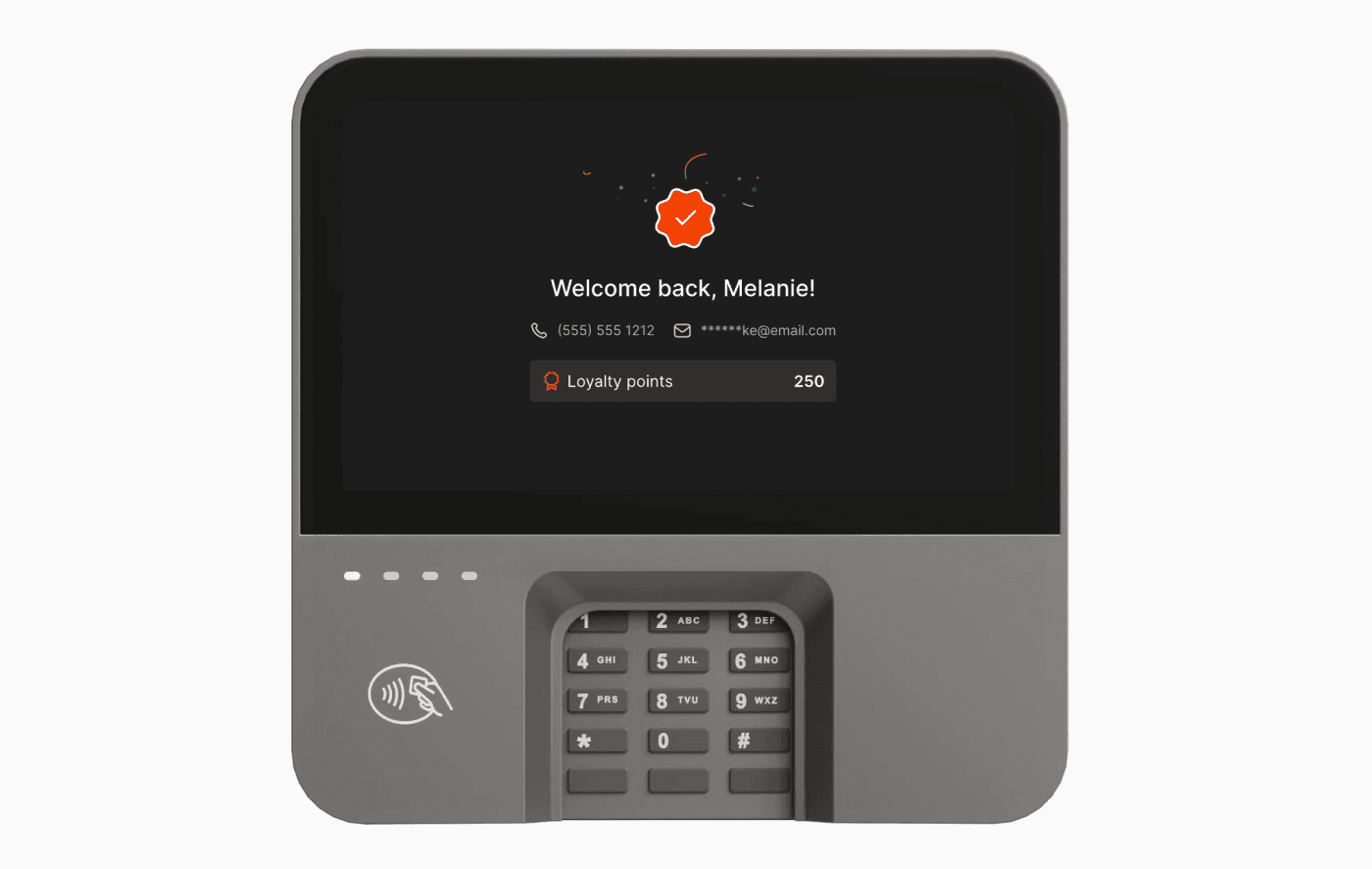
Customer walks up. Cashier scans a phone number or loyalty card. Customer profile pulls up automatically — points balance, purchase history, any pending rewards. Items are rung up. Points are added automatically. If the customer has enough points to redeem, the option appears on screen and the discount applies at the register without a manager override or a separate app. The whole interaction adds 10 seconds to checkout.
That’s it. No second system. No manual reconciliation at the end of the day. No customer asking “wait, I thought I had more points than that” while a line builds behind them.
With Scotch POS, enrollment, point tracking, and redemption all happen at the register. Customer data is stored in the same system you use for inventory and reporting, which means purchase history informs your reorder decisions the same way it informs your loyalty communications. You’re not moving data between platforms — it’s already where you need it.
Using Loyalty Data to Make Better Inventory Decisions
The purchase history sitting in your loyalty database is also a demand signal. If 80% of your loyalty members buy whiskey and only 20% buy wine, and you’re allocating floor space 50/50, that’s a planning decision you can now make with data instead of instinct.
More specifically: loyalty data lets you see what your best customers are buying, not just what sells overall. A high-volume product might be driven by infrequent buyers stocking up. A lower-volume product might be purchased almost exclusively by your top 100 customers. Knowing the difference changes how you order, how you price, and where you put it on the shelf.
This is the link between loyalty and inventory management that most guides miss entirely. Your loyalty program isn’t just a retention tool — it’s a customer intelligence system, if you’re willing to use it that way.
Is a Loyalty Program Right for Your Store? A Pre-Launch Checklist
Before you build anything, work through this list:
- Check your state’s enticement laws. Review your ABC board’s promotional guidelines. Confirm what rewards are permissible. If unclear, get a 30-minute legal consultation.
- Run the margin math. Set a point value based on your actual gross margin. Calculate what a 30% redemption rate costs you per month.
- Decide on program structure. Flat-rate points for simplicity. Tiered if you have a clear VIP segment and the POS to support it. Pick one.
- Choose POS-integrated over standalone. If your current POS can’t handle loyalty natively, that’s a conversation worth having before you bolt on a third-party tool.
- Set an enrollment rate goal. Target 5–10% of monthly transactions in the first six months. Write it down. Track it weekly.
- Draft your enrollment script. Two sentences. Benefit-forward. Practice it in a staff meeting.
- Set up a privacy policy and opt-in language. Required for email and SMS marketing. Do this before you collect a single contact.
- Define your first reward structure. Start simple. Points redeemable for merchandise or store credit on non-restricted items. Add complexity after you have 200+ enrolled members.
- Plan your first communication. A welcome message to new enrollees is the most important email you’ll send. Write it before you launch.
A loyalty program isn’t a magic retention tool — it’s an operational system that requires sustained execution to pay off. Stores that get it right treat enrollment like a sales KPI, reward structure like a margin decision, and customer data like the business intelligence asset it actually is.
The stores that fail at it treat it like a marketing campaign they launch once and move on from.
If you want to see how Scotch handles enrollment, point tracking, and redemption at the register — without a separate app or manual reconciliation — book a demo and we’ll walk you through the loyalty workflow. It takes 20 minutes and you’ll know exactly what built-in loyalty looks like in a real checkout flow.